
Stage Lights 101: Types, Uses & How to Choose the Right Setup
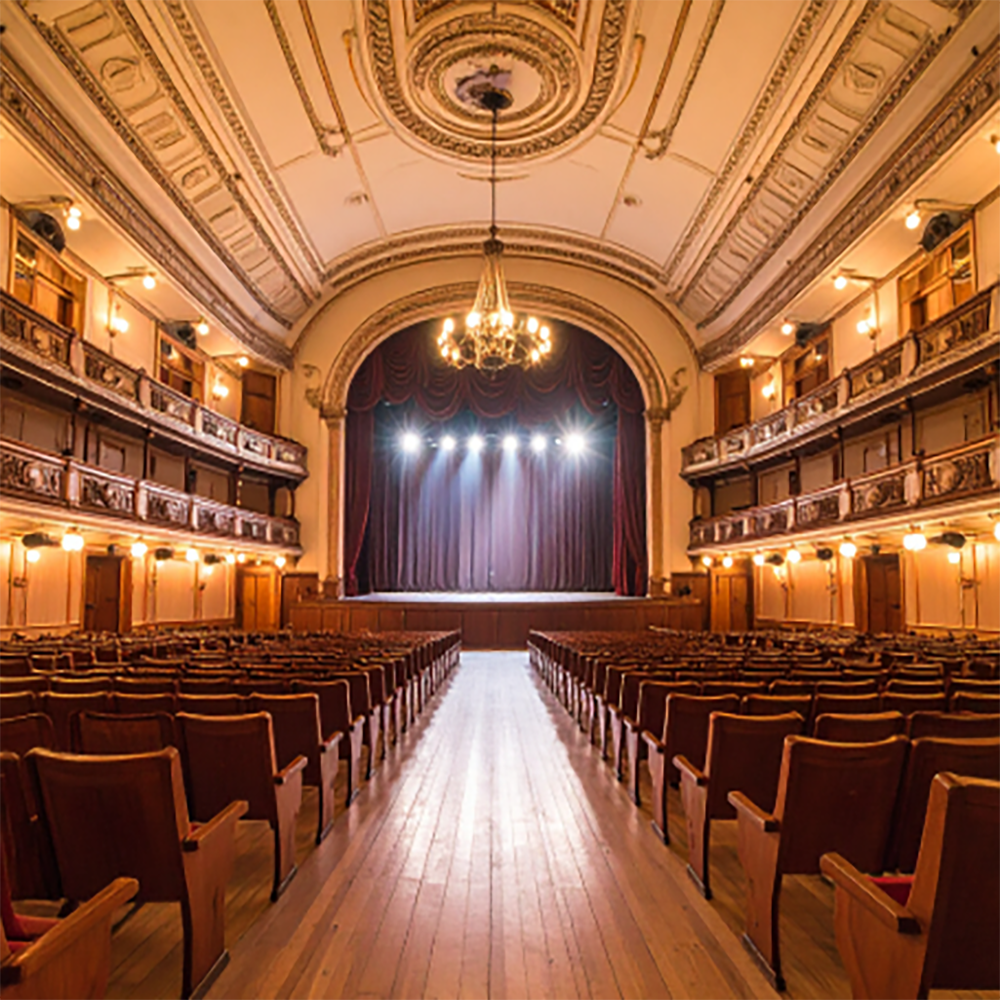
Classic theatre interior showing stage, audience seating and architectural ceiling.
Stage lights illuminate performers and create visual atmosphere through controlled beams, colors, and movements. These fixtures range from simple spotlights that focus on individual performers to complex moving head systems that generate dynamic patterns across venues.
Understanding Stage Light Categories
Stage lighting fixtures fall into distinct categories, each engineered for specific visual tasks. The primary division separates static fixtures from intelligent lights, while a secondary classification organizes them by beam characteristics.
Spotlights and Profile Fixtures
Ellipsoidal reflector spotlights produce sharp, focused beams that lighting designers use for precise illumination. These fixtures contain adjustable shutters that shape the light beam, preventing spill into unwanted areas. You can insert gobos—metal or glass templates—into the gate to project patterns ranging from architectural textures to brand logos.
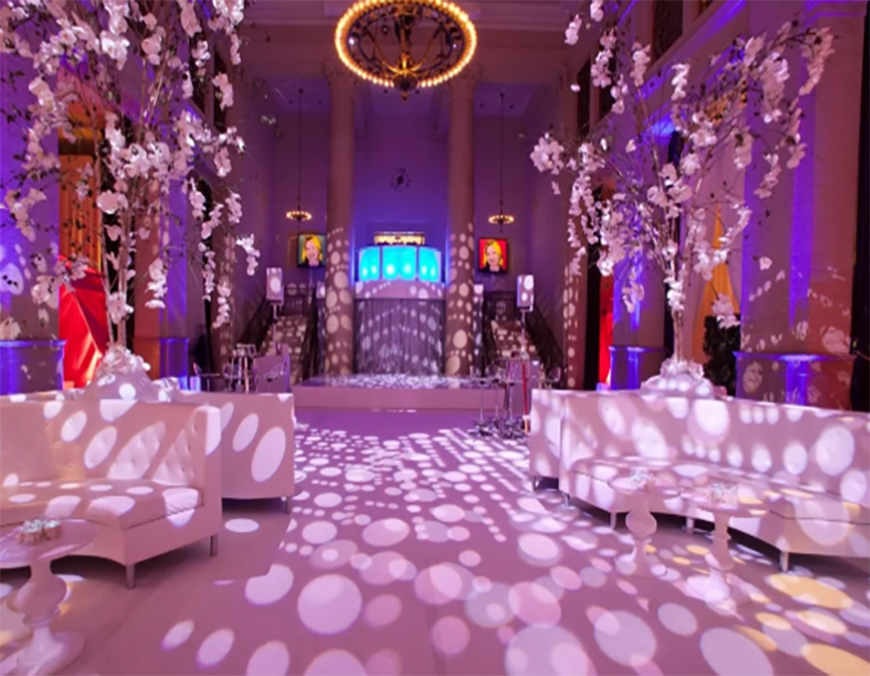
Event space with circular gobo patterns projected on the floor and walls.
Profile spots deliver beam angles typically between 15 and 50 degrees. The narrower angles concentrate light over longer distances, making them essential for highlighting performers on large stages. Modern LED versions output 11,600 lumens while consuming only 468 watts, a 40% efficiency gain over 2023 models.
Fresnel Lights
Named after French physicist Augustin-Jean Fresnel, these fixtures produce soft-edged beams through their distinctive ridged lens. The light source moves closer or farther from the lens, adjusting the spread from a narrow 10-degree spot to a wide 55-degree flood.
Theater productions favor Fresnels for general stage washing because their graduated beam edges blend seamlessly. You can attach barn doors to the front, creating four adjustable metal flaps that block light from specific directions. This accessory proves particularly useful when you need to prevent light from hitting the audience or bleeding onto dark set pieces.
PAR Cans
Parabolic aluminized reflector cans are sealed-beam units similar to vehicle headlights. The lamp, reflector, and lens form a single integrated unit. PAR cans lack the adjustability of other fixtures but deliver reliable, intense light at accessible price points.
These fixtures come in standard sizes—PAR 36, 46, 56, and 64—with the number indicating the lamp diameter in eighths of an inch. A PAR 64 measures eight inches across its face. You select beam width by choosing different lamp types: very narrow (VNSP), narrow (NSP), medium flood (MFL), or wide flood (WFL). LED PAR cans replaced traditional tungsten versions in most installations, offering RGB color mixing without physical gel filters.
Floodlights and Wash Fixtures
Floodlights spread even illumination across large surfaces without lenses or beam-shaping accessories. Their design relies entirely on reflector geometry to distribute light. Symmetrical floodlights cast light equally above and below their mounting point, while asymmetrical models direct most output in a single direction.
Cyclorama lights represent a specialized floodlight category designed to wash vertical backdrops with uniform color. These open-faced fixtures mount close to the cyc, either on the floor or overhead, creating seamless sheets of colored light. Strip lights extend this concept with multiple lamps arranged horizontally, allowing color mixing and broader coverage.
Moving Head Lights
Intelligent fixtures contain motors that pan horizontally and tilt vertically, controlled remotely through DMX protocols. These sophisticated units integrate multiple functions: beam angle adjustment, color mixing, gobo rotation, prismatic effects, and focus control.
Moving heads divide into three categories based on output characteristics. Spot fixtures generate narrow, defined beams with gobo projection capability. Wash lights produce broader, softer output for general coverage. Beam lights create extremely narrow shafts—often 1 to 8 degrees—that cut through fog to form aerial effects. The global programmable stage lighting market reached $2.9 billion in 2024, with moving head fixtures driving growth due to their versatility.
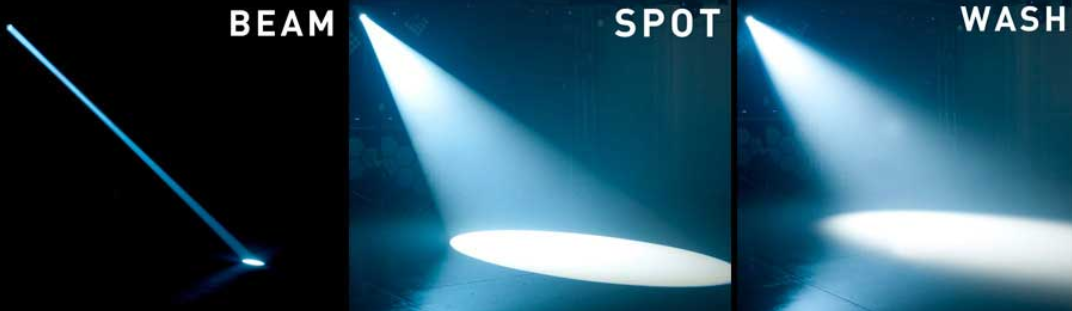
Beam, spot and wash stage light beams compared side by side.
LED Technology Integration
Light-emitting diode fixtures dominate modern stage lighting, capturing 60% of the market in 2024. LEDs last 50,000 hours compared to 2,000 hours for traditional tungsten lamps, reducing replacement labor and material costs. A 40-watt LED can match the output of a 500-watt halogen fixture, cutting electricity consumption by 92%.
Advanced LED systems use RGBW (red, green, blue, white) or RGBAL (adding amber and lime) emitters to create any color without physical filters. This capability eliminates the time and expense of installing and changing gel sheets. Some fixtures achieve color rendering index (CRI) scores above 95, ensuring skin tones and costumes appear natural under colored washes.
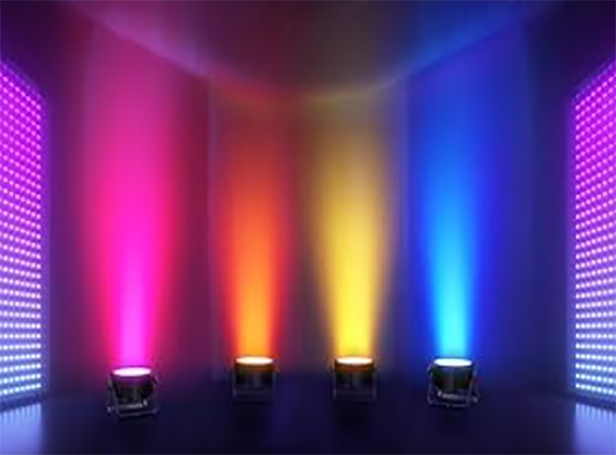
LED PAR uplights washing a wall with different colors beside LED pixel panels
Choosing Stage Lights for Your Venue
Venue characteristics directly determine which fixtures will function effectively. Ceiling height, stage dimensions, available power, and ambient light levels all constrain your options before aesthetic preferences enter consideration.
Assessing Physical Constraints
Calculate your throw distance—the space between fixture mounting position and the stage. Spotlights need sufficient distance to focus properly; mounting them too close creates overly wide beams that spill beyond target areas. A 19-degree lens positioned 20 feet from the stage illuminates a circle approximately 7 feet across. If your ceiling height is only 12 feet and you need to light a 6-foot area, you'll require a narrower lens or a different mounting angle.
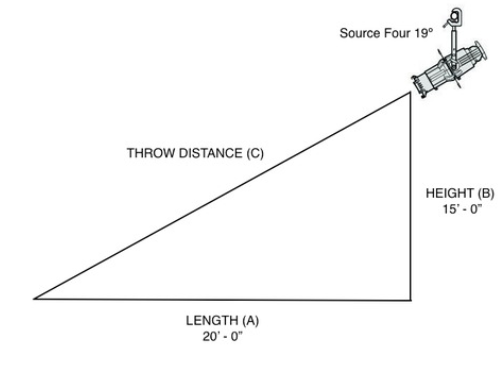
Diagram showing throw distance, mounting height and stage length for a 19-degree spotlight.
Check your electrical capacity before purchasing. LED fixtures draw less power, but a full lighting rig still demands significant amperage. Four moving heads at 300 watts each plus eight LED PARs at 100 watts each totals 2,000 watts. On a 120-volt circuit limited to 15 amps, you're restricted to 1,800 watts maximum, forcing you to split the load across multiple circuits. Document which outlets connect to which breakers to avoid overloads during events.
Budget-Based Selection Strategy
Small venues operating on $800 to $2,000 budgets should prioritize versatile fixtures over specialized units. Start with 2-4 LED PAR lights for color washing. These deliver the visual impact that transforms a performance space while remaining affordable at $80-150 per unit. Add 1-2 effect lights such as mini moving heads or basic LED matrix fixtures to create movement and energy.
Entry-level moving heads from manufacturers like ADJ provide pan and tilt movement, basic gobos, and strobe effects for under $300 per fixture. While they produce less output than professional models, they satisfy the needs of venues under 6 meters wide with low to moderate ambient light. Reserve $200-300 of your budget for mounting hardware, DMX cables, and power distribution strips.
Mid-budget setups between $2,000 and $5,000 can incorporate higher-output fixtures and more sophisticated effects. Invest in 4-6 professional-grade LED PARs with RGBWA+UV emitters for richer color mixing. Add 2-4 moving spots or washes that include motorized zoom, allowing one fixture to serve multiple purposes throughout a show. Include at least one profile spot for precise highlighting, and consider adding LED strip lights for stage edge accents.
Matching Fixtures to Event Types
Concert lighting demands high-output fixtures capable of cutting through stage haze and competing with video screens. Beam lights excel here, creating dramatic aerial effects synchronized to music. Pair them with LED washes for broad color coverage and moving spots for performer tracking. The Betopper LM0740, popular in mobile DJ rigs, combines wash capabilities with motorized zoom, providing both wide stage coverage and focused beam effects from a single unit.
Theater productions require precise control and natural-looking illumination. Fresnels provide the soft, blendable light needed for realistic scenes, while profile spots offer sharp focus for soliloquies and featured moments. Gobos create environmental textures—dappled forest light, window shadows, abstract patterns that suggest mood without literal representation. Choose fixtures with quiet cooling fans; mechanical noise disrupts dramatic moments that rely on silence.
Corporate events and conferences prioritize even illumination that makes speakers clearly visible without dramatic shadows. Front lighting from ellipsoidal spots ensures faces remain well-lit at lecterns. Add subtle color washes to differentiate segments—cooler tones for technical presentations, warmer hues for awards ceremonies. Wireless LED uplights placed around the room perimeter provide flexible accent lighting without cable runs across event spaces.
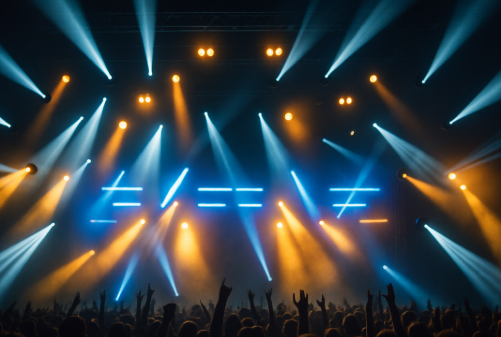
Concert stage with blue and amber beams over a cheering crowd.
Essential Setup Principles
Proper stage lighting balances visibility with atmosphere through deliberate fixture placement and beam angle selection. The fundamentals evolved from theater practice but apply to any performance space.
Three-Point Lighting Foundation
Key light provides the primary illumination, typically positioned 45 degrees to the side and 45 degrees above the subject. This angle creates facial definition while avoiding the flat appearance of straight-on lighting. Fill light, placed opposite the key at a lower intensity, softens shadows without eliminating them entirely. The ratio between key and fill determines the mood—higher contrast for drama, lower for naturalistic scenes.
Back light separates performers from the background by creating a rim of light along their edges. Position these fixtures behind and above subjects, angling down at approximately 45 degrees. Without back lighting, performers blend into their surroundings, reducing visual depth. This becomes especially critical when both performers and backgrounds share similar tones.
Small venues often skip side lighting due to space constraints, but it adds dimension that front and back light alone cannot provide. Side light grazes across the stage parallel to the performance area, sculpting form through highlights and shadows. Dance performances particularly benefit from strong side lighting, which emphasizes body movement and creates striking silhouettes.
Color Theory Application
Color temperature influences emotional response before conscious recognition occurs. Warm colors—reds, oranges, ambers—generate feelings of energy, passion, or comfort. They make performers appear healthy and engaging. Cool colors—blues, cyans, purples—evoke calm, mystery, or melancholy. Pure blue can make skin look sickly if overused; mix it with warmer tones or reserve it for specific atmospheric moments.
Complementary color pairs create visual interest without overwhelming the stage. Blue and amber work together effectively; the blue provides cool shadows while amber delivers warm highlights, creating a sunset effect. Avoid combining too many colors simultaneously unless the production specifically calls for chaotic energy. Restrict most scenes to two or three colors maximum, changing the palette as the performance progresses rather than displaying every available color at once.
Green deserves special consideration. While it represents nature and growth conceptually, stage green often makes people appear ill under its glow. Use it sparingly, mixed with other colors, or reserve it for non-human elements like scenic projections. Lime green combined with magenta creates a modern, energetic look popular in electronic music events, but traditional theatrical contexts rarely employ pure green on performers.
Common Setup Mistakes
Overlighting ranks as the most frequent error. New operators often activate every fixture at full intensity, washing out performers and creating visual monotony. Professional lighting builds gradually, starting with foundational elements and adding layers selectively. If you can't identify a specific purpose for a light—what it highlights, what mood it creates—leave it off.
Ignoring venue characteristics causes practical problems. A fixture package designed for a 10-meter stage with 5-meter ceilings won't function properly in a 6-meter room with 3-meter ceilings. Beams overlap incorrectly, hot spots appear in wrong locations, and some fixtures literally cannot achieve proper focus from the available mounting positions. Always survey the space before specifying equipment.
Mismatched DMX addressing creates confusion when fixtures respond to wrong controls. Each fixture occupies a range of DMX channels—a simple PAR might use 3 channels for RGB, while a moving head could require 16 channels for all its functions. If you don't maintain organized address assignments and document which fixture occupies which channels, programming becomes impossible. Separate fixtures by function when assigning addresses: group all washes together, all spots together, rather than randomly distributing addresses as you connect fixtures.
Insufficient power planning leads to mid-show failures. Calculate total wattage for all fixtures, then add 20% margin for power supply inefficiencies and startup surges. Distribute loads across multiple circuits rather than connecting everything to a single outlet. Use appropriate cable gauges for the distances and amperages involved—undersized extension cords heat up and create fire hazards or voltage drops that dim your lights.
Control Systems and Programming
Lighting control evolved from manual dimmer banks to sophisticated digital protocols that manage hundreds of parameters simultaneously. Understanding control options helps you select systems that match your operational needs.
DMX512 Protocol Basics
Digital multiplex (DMX) transmits control signals as data packets over specialized cables, typically 5-pin XLR connectors. Each DMX universe contains 512 channels, with each channel carrying a value from 0 to 255. Simple fixtures might use 3 channels—one each for red, green, and blue intensity. Complex moving heads consume 16 to 32 channels, controlling pan, tilt, zoom, focus, color mixing, gobo selection, prism rotation, and more.
Connect fixtures in series, running a DMX cable from the controller to the first fixture, then from that fixture's DMX output to the next fixture's input. Terminate the last fixture in the chain with a 120-ohm resistor to prevent signal reflection that causes flickering. Most modern fixtures include built-in termination you can activate via menu settings.
DMX addressing must be set correctly for each fixture. If you assign a 16-channel moving head to address 1, the next fixture should start at address 17 (1 + 16). Overlapping addresses cause two fixtures to respond to the same control channels, creating confusion. Many controllers offer automatic address calculation or visual patching tools that simplify this process.
Control Approaches for Different Users
Sound-activated mode enables fixtures to respond to music through built-in microphones, ideal for small venues without dedicated operators. Fixtures strobe, change colors, or move in time with beat detection. The LPC1818 PAR and LF4808 matrix strobe offer vibrant auto-run programs that cycle through chase patterns and color combinations without programming. This approach limits creative control but requires zero technical knowledge.
Manual control boards use physical faders for each fixture or group, providing hands-on operation that some designers prefer. These controllers work well for permanent installations with consistent layouts—houses of worship, small theaters, clubs with regular shows. You preset scene looks, then recall them via numbered buttons during performances. Basic controllers start around $150 for 8-16 channels, sufficient for small static rigs.
Software-based control transforms laptops or tablets into lighting consoles through DMX USB interfaces. Programs like QLC+ (free) or LightKey (paid) offer virtual faders, complex effect generators, and timeline-based programming. This approach excels for complex shows that require precise timing with audio and video elements. The learning curve is steeper, but the creative possibilities expand dramatically once you master the interface.
Wireless DMX eliminates cable runs in challenging spaces or mobile applications. Battery-powered LED fixtures with built-in wireless receivers communicate with transmitters connected to your controller. This technology proved essential during the post-2024 live events rebound, when production timelines compressed and setup windows shortened. Wireless systems do introduce potential interference risks, so maintain wired backups for critical fixtures.
Emerging Technologies Shaping Stage Lighting
The stage lighting industry experiences rapid evolution as manufacturers integrate artificial intelligence, sustainable practices, and network protocols into fixture design.
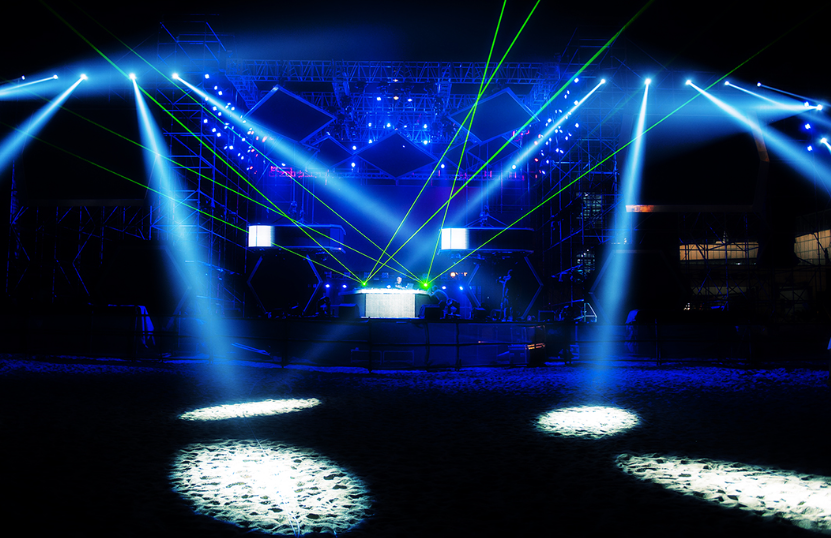
Large outdoor stage with intense moving beams and laser effects at night.
AI-Powered Adaptive Systems
Intelligent lighting software now analyzes audio in real-time, automatically adjusting intensity, color, and movement to match musical dynamics. Advanced algorithms detect tempo changes, distinguish between verses and choruses, and predict dramatic moments. This technology reduces programming time from days to hours while creating more responsive shows. Some systems incorporate audience engagement data from mobile apps, allowing attendees to influence lighting patterns through their interactions.
Predictive maintenance systems monitor fixture performance parameters—LED degradation rates, motor wear patterns, cooling system efficiency. When sensors detect deviations from normal operating ranges, the system alerts technicians before failures occur. This capability matters particularly for touring productions where equipment failures during performances cost significant time and money.
Sustainability Initiatives
LED adoption continues accelerating beyond the 60% market share achieved in 2024. Battery-powered, wireless LED fixtures eliminate power cable requirements, reducing setup complexity while cutting electricity consumption. The GreenStage Festival in Berlin operated entirely on solar-powered LED rigs in 2025, demonstrating carbon-neutral event lighting while maintaining full visual capabilities.
Manufacturers prioritize recyclable materials in fixture construction. Aluminum housings, easily separable components, and standardized fasteners facilitate end-of-life disassembly. Some companies offer trade-in programs where old fixtures get refurbished or materials get recovered for reuse. Energy-efficient dimmers that maintain precise control at low levels further reduce power waste.
Longer fixture lifespans reduce replacement frequency. Where traditional lamps required swaps every 2,000 hours, current LED fixtures operate 50,000 hours before noticeable degradation. A fixture running 4 hours nightly lasts over 30 years at this rate. This longevity shifts purchasing decisions from recurring consumables to long-term capital investments with predictable depreciation.
Network Protocol Integration
Art-Net and sACN protocols allow lighting data to travel over standard Ethernet networks rather than dedicated DMX cables. This enables fixture control from anywhere on the network, remote monitoring of fixture status, and integration with video and audio systems through unified show control platforms. Large venues benefit most, eliminating miles of DMX cable in favor of structured network infrastructure.
Pixel mapping transforms individual LED emitters into video displays. A grid of LED bars becomes a low-resolution screen showing graphics, text, or video content. Specialized software maps media files to fixture positions, creating dynamic backdrops that combine lighting and projection. This technique appeared in Radiohead's 2008 tour and now reaches smaller productions as costs decline.
Moving lights equipped with onboard processors execute complex patterns without constant communication from controllers. You upload show programs directly to fixtures, which then run autonomously or synchronize with each other through peer-to-peer protocols. This approach increases system reliability—if the controller fails, fixtures continue operating from internal memory.
Practical Selection Guide by Venue Size
Matching fixture counts and types to actual space requirements prevents both under and over-investment in lighting infrastructure.
Small Venues (Under 100 Capacity)
Intimate spaces like coffee shops, small bars, or house concert rooms need 4-8 fixtures total. Use 2-4 RGBW LED PARs for general color washing, positioning them on floor stands or wall mounts around the performance area. Add 1-2 compact moving heads or effect lights for visual interest during uptempo moments.
For venues under 5 meters square with ceiling heights below 3 meters, consider crossbar light stands that position all fixtures on a single portable frame. This eliminates ceiling installation requirements and provides flexibility to adjust heights and angles between different performance configurations. Budget $800-1,500 for a complete basic package including stands and simple controllers.
Medium Venues (100-500 Capacity)
Rooms accommodating 100-500 people typically measure 10-15 meters across with 4-5 meter ceilings. Install 8-16 fixtures: 4-6 LED PARs for washing, 3-5 profile spots or Fresnels for front lighting, 2-3 moving heads for effects, and 2-4 uplights or strip lights for depth. Permanently rig lights to ceiling-mounted truss or individual rigging points to maximize floor space.
This size venue benefits from a mid-range DMX controller with 24-48 channels and scene storage. Program preset looks for different event types—concerts, speaking engagements, dance parties—that operators can recall quickly. Consider adding a small fog machine; haze makes beams visible and adds atmosphere without obscuring sightlines. Budget $3,000-7,000 depending on fixture quality and installation complexity.
Large Venues (500+ Capacity)
Theaters, clubs, and performance halls serving 500+ patrons require 20-40 fixtures or more. Develop a layered approach: front lighting from 6-10 profile spots or Fresnels, 8-12 moving heads for dynamic effects, 6-10 LED PARs for washing, and 4-8 specialty units like beam lights or LED matrix panels. Add side lighting and overhead positions to create complete coverage from multiple angles.
Professional installations use DMX networking to manage multiple universes, potentially controlling 1,000+ channels across dozens of fixtures. Hire an experienced lighting designer to create the system architecture and a qualified electrician to handle power distribution. Large rigs demand structured maintenance schedules—cleaning lenses, inspecting rigging hardware, updating fixture firmware. Budget $15,000-50,000+ depending on venue requirements and equipment specifications.
Maintenance and Troubleshooting
Regular maintenance extends fixture life and prevents mid-show failures that disrupt performances and disappoint audiences.
Routine Care Procedures
Clean lenses and reflectors every 2-3 months in normal environments, monthly in dusty conditions. Dirt and haze residue accumulate on optical surfaces, reducing output by 30% or more. Use microfiber cloths slightly dampened with distilled water or specialized optical cleaning solution. Never use paper towels or rough materials that scratch lens coatings.
Inspect mounting hardware before each major event. Check that clamps remain tight, safety cables are properly attached, and no cracks appear in yokes or hanging brackets. Fixtures that fall cause injuries and equipment damage. Replace any hardware showing wear or corrosion immediately.
Verify DMX connections periodically. Corrosion on XLR pins creates intermittent signals that cause fixtures to flicker or respond erratically. Clean connector pins with contact cleaner and ensure cables aren't kinked or crushed. Store cables properly by coiling them loosely rather than wrapping tightly around objects, which damages internal conductors over time.
Solving Common Issues
When fixtures don't respond to control signals, start with addressing. Confirm the fixture's DMX address matches your controller's patch. Check that fixtures with multiple operating modes are set correctly—a 16-channel mode fixture won't respond properly if your controller expects 8-channel mode. Put a misbehaving fixture on the same address as a working unit; if both respond to one controller channel, the issue is likely wiring or termination rather than the fixture itself.
Color mismatches between supposedly identical fixtures suggest LED degradation or calibration drift. High-quality fixtures include color calibration settings in their menus. Some manufacturers provide calibration targets or spectrophotometer readings so you can match fixtures precisely. In other cases, grouping mismatched fixtures in different zones prevents obvious disparities—all stage left fixtures together, all stage right together.
Mechanical noise from moving heads indicates motor or bearing wear. Some noise is normal, but loud grinding or squealing requires service before motors fail completely. Keep fixtures clean—dust infiltration accelerates bearing degradation. Most manufacturers publish lubrication schedules; following these recommendations prevents premature wear on moving parts.
Budget Optimization Strategies
Thoughtful purchasing and rental decisions stretch limited budgets without compromising show quality.
When to Buy vs. Rent
Purchase fixtures for regular, predictable use. If your venue hosts weekly events requiring consistent lighting, ownership costs less than repeated rentals. Calculate break-even: a $500 moving head rented 10 times at $75 per event costs $750, exceeding purchase price. After that point, ownership saves money while providing equipment always available for impromptu needs.
Rent for occasional large events or specialty fixtures. Your annual gala might demand 40 fixtures when you normally use 12. Renting the extra 28 lights for one weekend makes more financial sense than buying equipment that sits unused 51 weeks yearly. Similarly, rent expensive specialty fixtures like high-output beam lights or architectural projectors for productions where these specific effects matter but don't justify permanent inventory.
Hybrid approaches work well. Own your core fixtures—the PARs, Fresnels, and basic spots you use constantly—then rent add-ons as productions require. This strategy builds a useful inventory gradually while maintaining access to the full range of equipment through rental relationships. Negotiate package deals with rental houses; consistent customers often receive discounts or priority access during busy seasons.
Maximizing Value From Existing Gear
Add accessories before replacing fixtures. A $150 PAR producing single colors transforms with a $40 DMX controller into a programmable RGB unit. Gobos cost $15-40 each but let one profile spot create dozens of looks throughout a show. Barn doors ($30-50) prevent light spill, making poorly-positioned fixtures more useful.
Combine fixtures creatively. Layer two 50-watt LED PARs at different angles to achieve the coverage one 200-watt PAR would provide. This costs less than buying larger fixtures while offering more positioning flexibility. Mix cool and warm white LEDs to improve color rendering when you can't afford high-CRI fixtures—the temperature variation makes skin tones appear more natural than single-color sources.
Use architectural features as lighting surfaces. Bouncing light off white ceilings creates soft overhead fill without dedicated fixtures. Aiming fixtures at reflective panels redirects light into areas not directly accessible, effectively doubling your fixture count. Position uplights behind translucent materials—fabric, frosted acrylic, rice paper—for even diffusion and visual interest.
Frequently Asked Questions
How many stage lights do I need for a small venue?
4-6 lights provide adequate coverage for most small stages under 5 meters square. Start with 2-4 LED PAR lights for color washing, then add 1-2 effect lights like mini moving heads. This configuration handles most performance types while staying within typical $800-1,200 budgets.
What's the difference between LED and traditional stage lights?
LED fixtures consume 85-90% less electricity than halogen equivalents while lasting 25 times longer. LEDs generate minimal heat, reducing air conditioning loads and burn risks. They mix colors electronically without gel filters, eliminating ongoing consumable costs. Traditional fixtures still see use where extremely high output concentrations are needed, but LEDs now dominate general applications.
Do I need moving lights or will static fixtures work?
Static fixtures handle most lighting needs effectively at lower cost. Moving lights add dynamic visual interest for concerts and high-energy events but aren't necessary for speaking engagements, traditional theater, or budget-conscious installations. If your budget allows only a few moving fixtures, combine them with more numerous static units rather than buying all moving lights.
How do I control color in LED stage lights?
Most LED fixtures accept DMX control signals through XLR cables connected to lighting controllers. Controllers provide faders or touchscreens to adjust red, green, and blue intensity levels, mixing any color. Budget fixtures often include sound-activated and auto-run modes that change colors without controllers, useful for simple applications. Wireless control via smartphone apps is available on some newer fixtures.
What causes stage lights to flicker?
DMX signal issues cause most flickering. Check cable connections for corrosion or damage, confirm proper termination at the end of the fixture chain, and verify correct addressing. Electrical problems like insufficient power supply or damaged dimmer circuits also create flicker. Ensure each circuit carries appropriate loads and all wiring meets electrical code requirements.
Can I use regular LED bulbs instead of stage lights?
Standard LED bulbs lack the optical control, color accuracy, and durability required for stage use. Stage fixtures incorporate precision reflectors, lenses, and heat management systems that household bulbs omit. Stage LEDs typically offer color mixing, dimming compatibility, and rugged construction that residential products don't provide. While household LEDs cost less initially, they perform poorly and fail quickly under performance conditions.
How long do stage lights last?
LED stage lights operate 50,000 hours on average before noticeable degradation. At 4 hours daily use, this represents over 30 years of service. Traditional tungsten halogen lamps last approximately 2,000 hours, requiring frequent replacement. Moving head fixtures contain mechanical components—motors, belts, bearings—that need maintenance or replacement every 5-10 years depending on usage intensity.
What's the best stage lighting brand for beginners?
Entry-level manufacturers like Betopper, ADJ, and Chauvet offer reliable fixtures with simplified controls at accessible prices. These brands provide good build quality and customer support while costing 40-60% less than professional tier equipment. As you gain experience and requirements increase, you can add professional fixtures from Elation, Martin, or ETC while keeping budget units for less critical positions.